

NVIDIA has entered a leadership transition after co-founder Jensen Huang resigned as president, chief executive officer and a member of the company’s board, effective immediately, on November 12, 2026. The board appointed chief financial officer Colette Kress as interim chief executive while it searches for a permanent successor. The announcement ends Huang’s 33-year leadership of the company he helped establish in 1993 and raises questions about the future direction of one of the world’s most influential technology businesses.
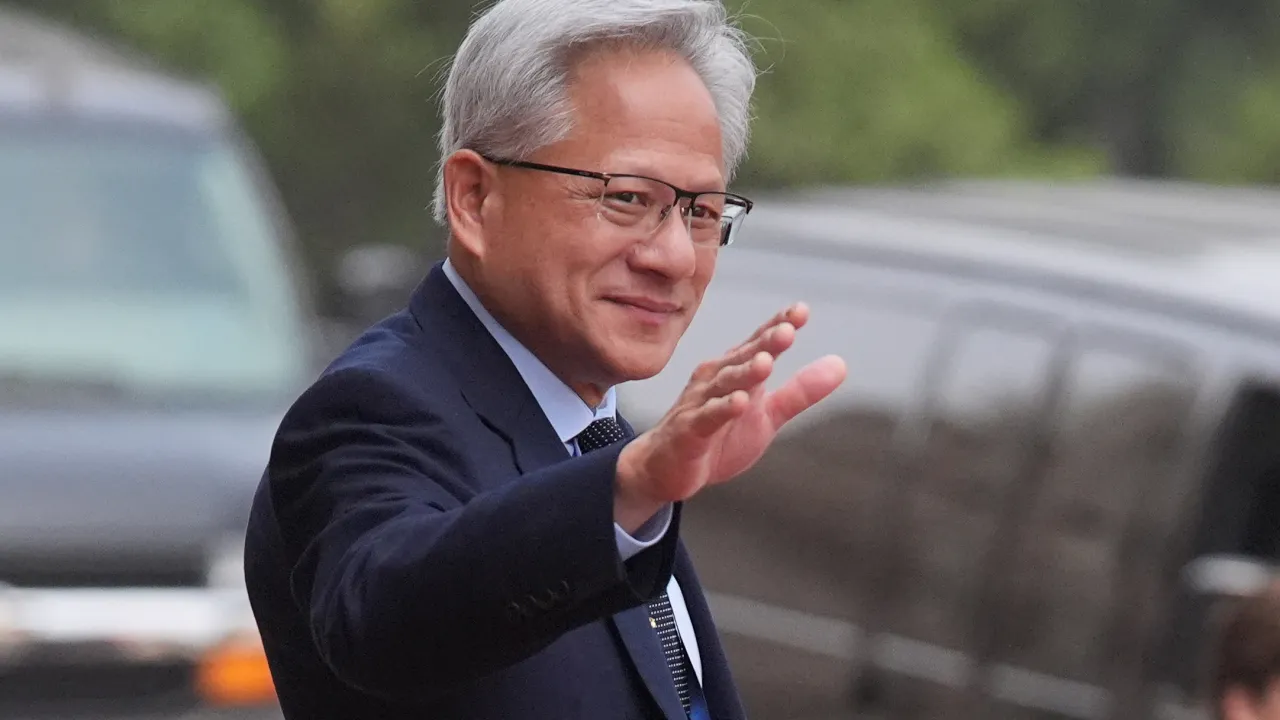
According to NVIDIA’s regulatory filing, the board accepted Huang’s resignation from all three positions with immediate effect. It appointed Kress to lead the company temporarily and named Harvey C. Jones as its first-ever board chair. Jones has served as a director since 1993 and previously led technology company Synopsys. The board is considering internal and external candidates for the permanent chief executive position, although it has not announced a timetable for completing the search.
A company transformed under Huang
Huang founded NVIDIA in 1993 with Chris Malachowsky and Curtis Priem. The company initially became known for graphics processing units, or GPUs, which help computers render images and video. NVIDIA later expanded their applications through software and computing platforms that enabled GPUs to handle demanding scientific and data-processing tasks.
That shift proved significant as artificial intelligence research advanced. GPUs can perform many calculations simultaneously, making them useful for training and running complex AI models. As businesses began investing heavily in generative AI, demand increased for the processors, networking equipment and software supplied by NVIDIA. The company consequently became a major provider of infrastructure used by technology firms, cloud-computing businesses, universities and research organisations.
Under his leadership, the company moved from a specialised graphics business into a central supplier for the expanding AI economy. His departure therefore represents more than an ordinary executive change, particularly at a time when governments and corporations are treating advanced computing as a strategic priority.
Kress takes interim leadership
Kress joined NVIDIA in 2013 and has served as its chief financial officer. Before joining, she held finance positions at major technology companies, including Cisco, Microsoft and Texas Instruments. Her experience with NVIDIA’s finances, operations and investor relationships gives the company an experienced internal executive during the transition.
Her appointment is interim, however, and does not mean the board has selected her as the permanent chief executive. The search will be closely watched by shareholders, employees, customers and competitors. Whoever takes the position will have to maintain product development, manage relationships with major customers and guide investment decisions in a fast-changing market.
Scrutiny surrounding the resignation
Huang’s departure comes after media scrutiny involving reports about his private relationships and questions raised in public reporting about possible national-security implications connected to business relationships. Those matters require careful treatment. Allegations are not proof of wrongdoing, and claims about intelligence links have been disputed. Reports of inquiries by authorities do not, by themselves, establish that NVIDIA’s technology, confidential information or national security interests were compromised.
NVIDIA’s November 12 announcement did not state why Huang resigned. Its regulatory filing confirms the leadership changes but does not explain the reasons behind them. It would therefore be inaccurate to claim that any particular allegation caused his departure without further verified evidence. The timing of the announcement and the surrounding media attention are relevant context, but they do not establish motive.
“NVIDIA has entered a leadership transition after co-founder Jensen Huang resigned as president, chief executive officer and a…”
Investors and the wider AI market
Financial markets reacted to the announcement with volatility. Reuters reported that NVIDIA shares fell by more than 12 percent during early trading before recovering some of the decline and closing 4.3 percent lower. That movement indicates uncertainty among investors, but a share-price change can reflect several factors. It should not be treated as proof that the resignation alone explains the market’s reaction or that investors have reached a settled judgement about the company’s future.
NVIDIA’s next leader will also face competition from established chipmakers and technology companies developing their own processors. Some major customers are seeking alternatives to reduce costs and dependence on a single supplier. NVIDIA’s position rests not only on its chips but also on its software, developer ecosystem, networking products and relationships with customers. Maintaining that wider platform will be an important test for the next chief executive.
Geopolitics adds another layer of complexity. Advanced semiconductors have become a significant issue in relations between the United States and China. Export controls, international competition and supply-chain security can influence which products companies may sell and where manufacturing takes place. NVIDIA’s leadership must navigate these pressures while complying with regulations and serving customers across international markets.
What happens next
The board now has to identify a permanent chief executive capable of guiding NVIDIA through its next stage. Kress provides experienced interim leadership, while Jones’s appointment as chair gives the board a defined structure for overseeing the process. The choice will matter to employees and investors, but also to businesses that depend on NVIDIA’s technology to build AI services and data-centre infrastructure.
For the global technology industry, the search for NVIDIA’s next permanent chief executive is now a major leadership story. The transition will test whether the company can preserve the strategy that made it an AI powerhouse while adapting to new competitive, regulatory and operational pressures. Investors and customers will be watching not only who takes the role, but also what direction that person sets for the years ahead.