A strengthening El Niño climate pattern is drawing renewed attention from scientists and communities around the world as warmer Pacific Ocean temperatures threaten to disrupt weather patterns, raise coastal risks and intensify extreme conditions in several regions.
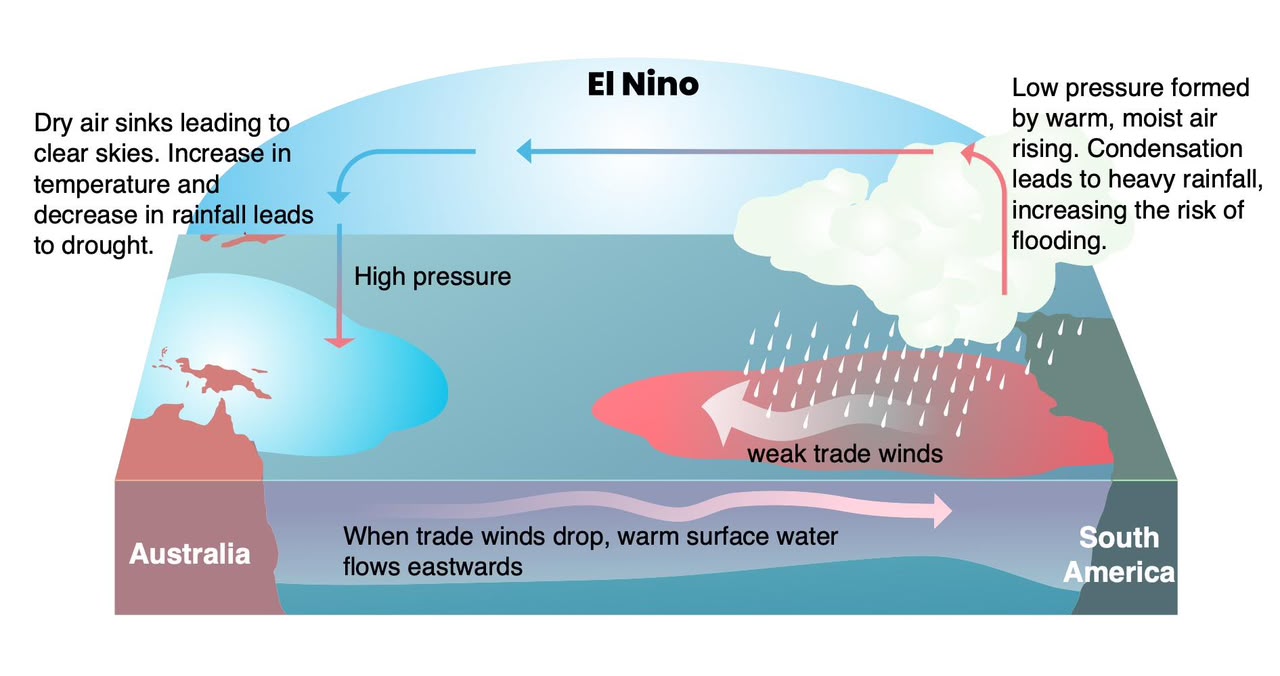
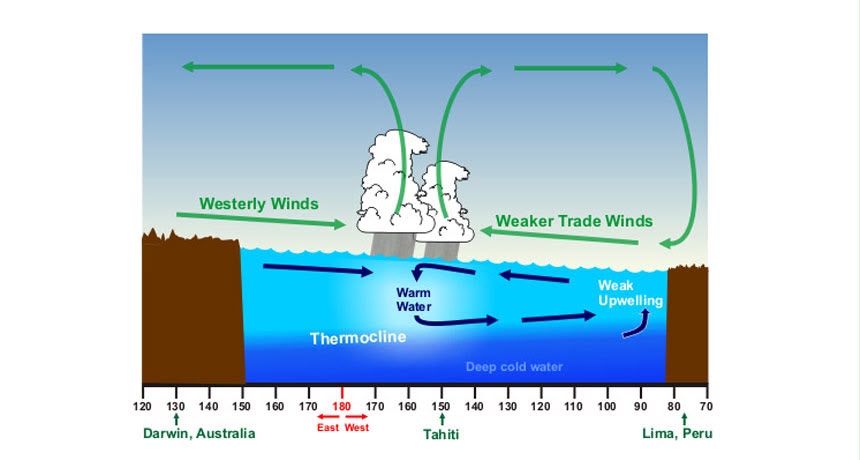
El Niño is a natural climate phenomenon that develops when surface waters across the central and eastern Pacific become unusually warm. Those changes can influence atmospheric circulation far beyond the ocean, affecting rainfall, temperatures and storm patterns across different parts of the world.
The latest developments are particularly significant for coastal communities along the United States West Coast.
A large pulse of warm water moving across the Pacific, known as a Kelvin wave, is expected to temporarily raise sea levels along parts of the coastline. Higher ocean levels can increase the risk of coastal flooding and erosion, particularly when high tides combine with strong winds or storms.
The impact of these changes is not limited to beaches.
Ports, roads, coastal infrastructure and low-lying communities can all become more vulnerable when sea levels rise. Even a temporary increase can make it easier for waves and storm surges to reach areas that would normally remain protected.
Scientists are also monitoring the potential effects on marine ecosystems.
El Niño can alter the distribution of nutrients in the Pacific by changing the movement of warm and cold water. This can affect marine species and fisheries, creating economic consequences for communities that depend heavily on the ocean.
The wider climate effects can be even more significant.
El Niño can influence rainfall across North and South America, parts of Asia and Australia. Some areas may experience unusually heavy rainfall and flooding, while others can face drought and higher temperatures.
That makes the phenomenon a global climate concern rather than a problem confined to the Pacific.
However, scientists stress that El Niño does not produce identical conditions everywhere. Its effects depend on the strength and timing of the event, as well as existing atmospheric and oceanic conditions.
The developing pattern is also being watched in the context of long-term global warming.
El Niño itself is a naturally occurring phenomenon and is not caused by climate change. However, a warmer global climate can influence the conditions in which El Niño events occur and can increase the consequences of extreme heat and other weather events.
“El Niño is a Pacific phenomenon with consequences that can reach far beyond the ocean, influencing weather, ecosystems…”
For governments and emergency agencies, preparation remains critical.
Early-warning systems, coastal monitoring and emergency planning can help communities respond to flooding, storms and other hazards associated with changing weather conditions.
Businesses are also likely to monitor the situation closely. Agriculture, fishing, shipping, tourism and energy markets can all be affected when major weather patterns shift.
The economic consequences can extend across borders because modern supply chains depend on stable weather, transport networks and reliable access to natural resources.
The coming months will therefore be closely watched by scientists and policymakers.
The Pacific Ocean may appear distant from many of the countries that experience El Niño’s effects, but its influence can travel across continents through the atmosphere.
The developing event is another reminder of how closely connected the world’s climate systems are.
For communities already facing rising temperatures, coastal erosion and unpredictable weather, understanding the changing Pacific could be essential to preparing for what comes next.