
The global artificial intelligence industry is facing growing scrutiny from investors as companies reassess the cost of financing data centres, advanced computing systems and the infrastructure needed to support increasingly powerful AI services.
After a period of substantial borrowing to fund artificial intelligence projects, new figures indicate that financing activity slowed sharply in September 2026. The change is raising questions about how technology companies will pay for their expansion and whether the revenue generated by AI products will justify the scale of investment.
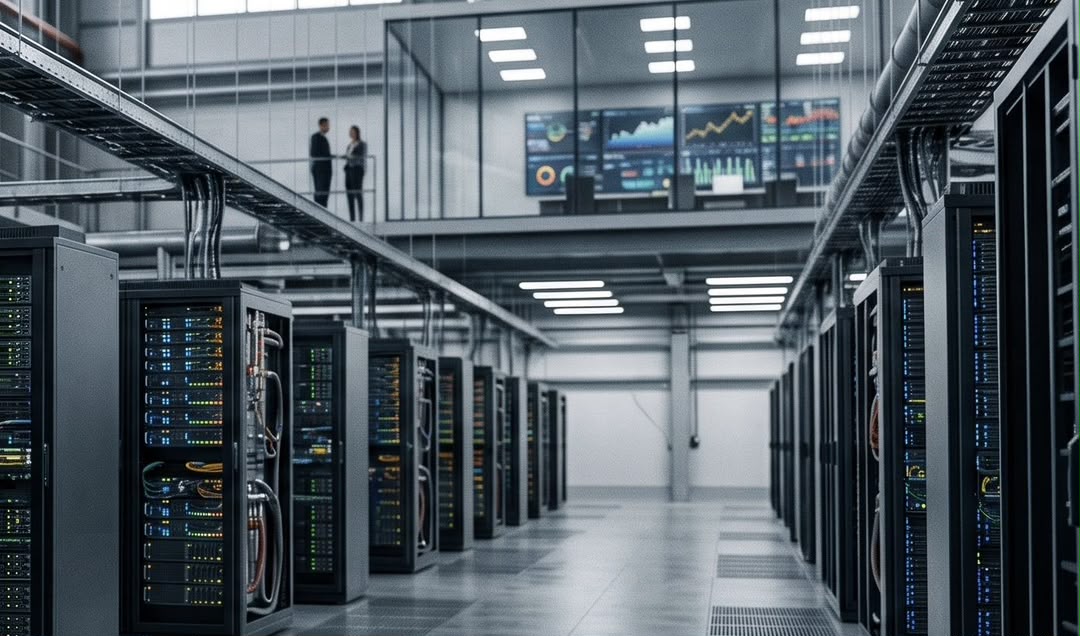
According to the Financial Times, AI-related debt issuance fell to approximately $23 billion in September, less than half the amount recorded in August. The figures suggest that lenders and investors are becoming more selective about financing projects associated with the rapidly expanding technology sector.
The slowdown does not mean that demand for artificial intelligence has disappeared. Instead, it highlights a growing challenge for an industry that requires substantial spending before many projects can demonstrate their long-term financial returns.
The rising cost of artificial intelligence
AI systems require significant computing power, electricity, cooling equipment and specialised semiconductor chips. Companies developing large-scale services must invest in data centres and supporting infrastructure capable of handling increasingly demanding workloads.
These facilities can require years of planning, construction and equipment procurement before reaching full operating capacity. Businesses must therefore commit substantial resources while facing uncertainty about future demand, competition and operating costs.
Major technology companies have continued to invest heavily in AI infrastructure because they expect the technology to reshape software, search, business operations and other industries. Data-centre operators and cloud providers are also competing to secure the computing capacity needed by AI developers.
However, the scale of the spending has increased pressure on companies to demonstrate that their investments can generate sustainable returns.
Borrowing can help businesses fund expansion without immediately relying entirely on existing cash reserves. But debt creates obligations that must be met even when revenue falls short of expectations or projects take longer than planned.
For investors, the central question is increasingly whether companies can turn AI adoption into reliable cash flow rather than simply announcing larger infrastructure budgets.
Why investors are becoming more cautious
The Financial Times reported that AI-related borrowing had risen substantially earlier in 2026 before financing activity slowed. The shift reflects concerns about leverage, rising borrowing costs and uncertainty surrounding the profitability of some proposed projects.
Investors must evaluate several risks when financing data-centre development. Construction costs can rise, access to electricity can become a constraint, and demand for computing capacity may develop differently from forecasts.
There is also the possibility that technological improvements could change the amount of computing power required to deliver particular AI services. Businesses investing in expensive facilities must consider whether those assets will remain competitive as hardware and software evolve.
Another concern is the relationship between the cost of developing AI products and the revenue those products generate. Strong user adoption does not automatically translate into sufficient income to cover infrastructure, research, staffing and financing expenses.
As a result, lenders may increasingly demand clearer financial projections, stronger contractual commitments from customers and evidence that projects can withstand changing market conditions.
A more selective financing environment could favour established companies with strong balance sheets and reliable customers, while making it harder for speculative ventures to secure funding.
Data centres remain central to the technology race
Despite the financing slowdown, data centres remain essential to the development of artificial intelligence.
“Artificial intelligence is becoming more than a technology story. It is reshaping global trade, creating new business opportunities…”
These facilities contain servers, networking equipment and specialised processors used to train and operate AI models. They also support cloud computing services that businesses use to store information, run applications and process large volumes of data.
Technology companies are competing to provide faster and more capable services to customers ranging from individual developers to multinational corporations. This competition creates incentives to invest in new facilities and secure supplies of advanced chips.
However, building additional capacity is not simply a question of obtaining financing. Operators must also secure suitable land, reliable electricity, cooling systems and the necessary network connections.
Energy availability is particularly important because large computing facilities can consume substantial amounts of electricity. Delays in obtaining power connections or completing construction can affect the timing of expected revenue.
These practical constraints mean that even companies with access to capital may face challenges in bringing planned facilities online.
What the shift means for businesses
The changing financing environment could influence how companies approach AI adoption over the coming months.
Businesses purchasing AI services may benefit if providers focus more closely on efficiency, pricing and practical commercial applications. Suppliers that can demonstrate measurable productivity improvements could be better positioned than those relying primarily on expectations of future growth.
Smaller technology companies may need to become more disciplined about spending, prioritising projects with clear customer demand rather than expanding infrastructure without sufficient evidence of profitability.
Investors will also be watching whether financing conditions improve or remain restrictive. Interest rates, energy prices, technology demand and broader economic conditions can all affect the cost of funding major projects.
For developing economies, including countries across Africa, the global investment cycle matters because AI infrastructure influences access to computing services, digital employment and opportunities for technology businesses. However, the immediate effect will vary by country and by the availability of affordable connectivity, electricity and technical skills.
Companies adopting AI should focus on specific business needs, including customer support, information management and productivity, while evaluating the financial and operational risks of each investment.
A new phase of scrutiny
The decline in September’s AI-related debt issuance provides a reminder that enthusiasm for a new technology does not remove the need for financial discipline.
Artificial intelligence may create substantial economic opportunities, but companies financing its development must still demonstrate that their business models can support the costs involved.
The next phase of the industry could therefore be shaped not only by advances in AI capabilities but also by the ability of developers, infrastructure operators and investors to balance innovation with sustainable financing.
The key issue is not whether companies will continue investing in AI. It is whether that investment can produce enough lasting economic value to justify the money committed to it.
Sources: Financial Times reporting on AI-related debt issuance and investor concerns, October 10, 2026; Reuters reporting on the cost of financing AI infrastructure and the industry’s long-term revenue challenges.