
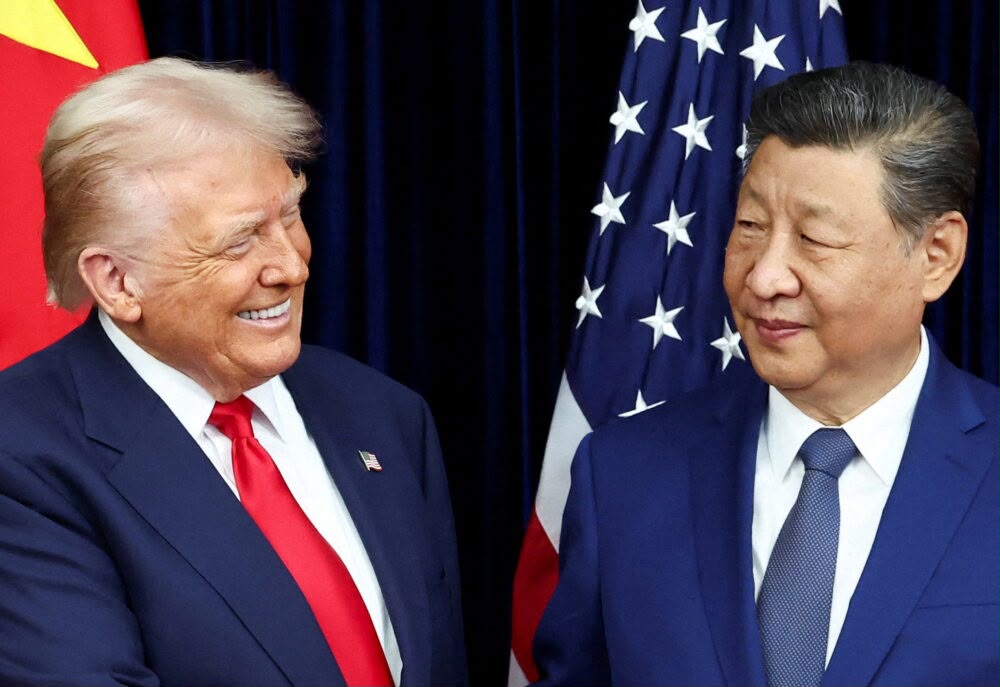
The eyes of the financial world are fixed firmly on Washington, D.C., as Chinese President Xi Jinping touches down for a monumental state summit with President Donald Trump. The meeting marks the most critical geopolitical pivot point of the year, aimed at defusing an escalating trade war that threatens to split the global technology supply chain in two.
Emergency Negotiations on Capitol Hill
Behind the scenes of the highly publicized state dinners, the real economic heavy lifting is being conducted by US Treasury Secretary Scott Bessent and Chinese Vice Premier He Lifeng. The two economic chiefs are locked in emergency, closed-door negotiations focusing on three highly volatile pillars: AI safety standards, critical mineral export bans, and retaliatory trade tariffs.
The Battle for Rare Earth Elements
At the heart of the corporate anxiety is the supply of critical minerals like gallium, germanium, and graphite. China currently controls the vast majority of the global processing infrastructure for these materials, which are absolutely essential for manufacturing everything from smartphone microchips to electric vehicle batteries and military radar systems.
Washington wants Beijing to roll back its stringent export restrictions, while Beijing is demanding a significant reduction in US tariffs on Chinese-manufactured green technologies and high-end electronics. Furthermore, both nations recognize that a lack of a unified safety framework for AI could lead to a dangerous, destabilizing digital arms race.
“What began as a simple way to send cash by text message has become the backbone of commerce…”
What is at Stake for the Markets?
A successful summit could unleash a massive relief rally across global tech stocks, particularly for semiconductor giants and automotive manufacturers. Conversely, a breakdown in talks will almost certainly result in a fresh round of punitive tariffs. For global businesses, this summit is a stark reminder that supply chain resilience is no longer just an operational metric—it is entirely dependent on high-stakes geopolitical brinkmanship.