

Wipro, one of India’s leading information technology services companies, is facing renewed pressure after reporting a significant decline in new contract bookings for the second quarter of its 2026–2027 financial year. Although the company recorded higher revenue compared with the same period last year, its weaker contract performance has raised concerns about its ability to maintain growth and compete effectively in the global technology services market.
The company’s total contract bookings fell to approximately $2.6 billion in the quarter ending 30 September 2026, compared with $4.7 billion during the same period a year earlier. The decline represents a major reduction in the value of new business secured by the company and highlights the difficulties facing its management as it attempts to strengthen its competitive position.

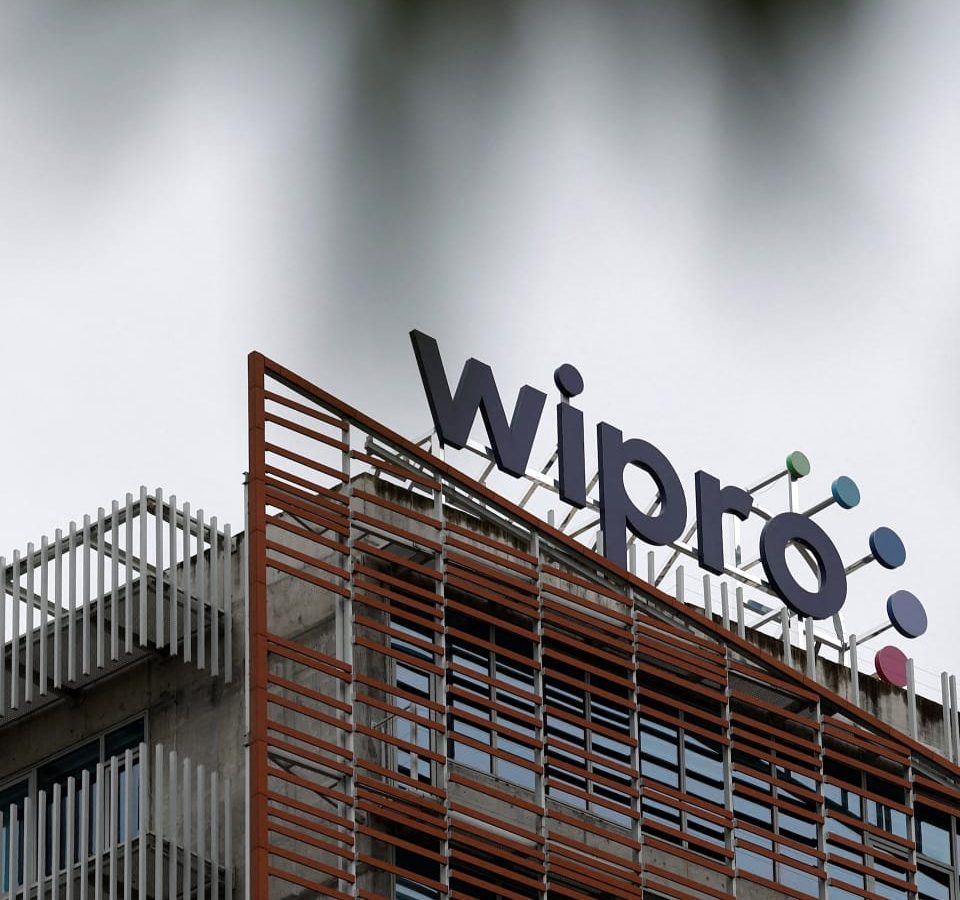
Wipro Corporate Campus Entrance
Photo source: NDTV Profit
The results were reported on 15 October 2026, drawing attention from investors, financial analysts and technology industry observers. The development is particularly important because Wipro operates in a highly competitive industry in which companies must continuously secure new clients, invest in emerging technologies and deliver services at competitive prices.
Revenue growth contrasts with weaker contract bookings
According to the company’s financial results, Wipro generated revenue of approximately 247.5 billion Indian rupees during the second quarter, equivalent to about $2.58 billion. This represented a 9.1% increase compared with the corresponding quarter of the previous year.
The revenue performance was slightly above analysts’ expectations, suggesting that the company continues to generate income from its existing customer relationships and ongoing projects. However, revenue growth alone does not necessarily indicate that a business is expanding successfully.
Contract bookings are an important measure because they provide an indication of the new work a company expects to undertake in the future. When bookings decline sharply, it can suggest that customers are delaying spending, competitors are winning more contracts or the company is struggling to secure large projects.
Wipro’s second-quarter figures therefore present a mixed picture. The company continues to earn revenue from its operations, but the decline in new bookings raises questions about whether that performance can be sustained in subsequent quarters.
The company’s net income also weakened. Its quarterly net profit fell to approximately 32 billion rupees, reflecting pressure from higher employee-related expenses and subcontracting costs.
These figures indicate that Wipro must address several challenges simultaneously: securing new business, controlling operating expenses and maintaining profitability.
Competition and artificial intelligence reshape the industry
One of the most important factors affecting Wipro is the rapid development of artificial intelligence. Businesses across the world are investing in AI tools to improve productivity, automate routine tasks and reduce operating costs.
These developments are changing the traditional business model of IT services companies. In the past, many technology service providers relied heavily on large teams of employees to manage software development, technical support, data processing and other business operations.
AI can automate some of these activities, potentially reducing the amount of human labour required for certain projects. At the same time, customers increasingly expect technology companies to provide AI-related services, modernise existing systems and demonstrate measurable business benefits.
This creates both opportunities and risks for companies such as Wipro. Businesses that adapt quickly can develop new services and win additional contracts, while those that respond slowly may lose customers to more innovative competitors.
Wipro also faces competition from companies including Cognizant and Tech Mahindra. These firms compete for contracts from multinational corporations seeking assistance with digital transformation, cloud computing, cybersecurity and software development.
Competition can force service providers to reduce prices, improve delivery standards and invest more heavily in technology. While these measures can help companies attract customers, they may also put pressure on profit margins.
Management faces pressure to improve performance
Wipro’s chief executive, Srinivas Pallia, faces the challenge of restoring stronger growth while maintaining financial discipline.
“Wipro, one of India’s leading information technology services companies, is facing renewed pressure after reporting a significant decline…”
The company’s management must identify why contract bookings have declined and determine which parts of the business require improvement. Possible priorities include strengthening relationships with existing customers, expanding AI-related services, improving sales performance and targeting industries with stronger technology spending.
The company must also balance the need to win new contracts against the need to protect profitability. Offering large discounts may help secure business in the short term, but excessive price competition can reduce the financial benefits of winning those contracts.
Wipro has indicated that it expects third-quarter revenue to range between approximately $2.57 billion and $2.63 billion. This forecast suggests that near-term performance may remain relatively flat, with the possibility of a modest decline or limited growth.
Investors will be watching closely to determine whether the company can convert its existing customer relationships and technology investments into stronger new business.
Implications for employees, customers and investors
The company’s performance has implications beyond its shareholders. Employees may be affected by changes in recruitment, project allocation and organisational priorities if management attempts to reduce costs or improve productivity.
Customers, meanwhile, will be interested in whether Wipro can continue delivering reliable services while investing in emerging technologies. Maintaining service quality is essential because large corporate clients often depend on external technology providers to manage critical business systems.
For investors, the central concern is whether the fall in bookings represents a temporary setback or a more persistent weakness in the company’s competitive position.
A single quarter cannot provide a complete answer. Future results, contract announcements and management decisions will help clarify the company’s direction.
Conclusion
Wipro’s second-quarter results reveal a company experiencing both progress and significant challenges. Revenue increased, but new contract bookings fell sharply and profits faced pressure from higher costs.
The growth of artificial intelligence, intense competition and changing customer expectations are forcing the company to reconsider how it wins and delivers business.
Wipro’s future performance will depend on its ability to secure new contracts, develop competitive technology services and manage costs without undermining long-term growth. The coming quarters will be important in determining whether the company can regain momentum and strengthen its position in the global IT services industry.
Reference: Reuters report on Wipro’s contract bookings | Wipro’s official financial results