

German automobile manufacturer Volkswagen has begun important wage negotiations with labour representatives amid growing tensions over its plans to reduce operating costs, cut jobs and potentially close several factories.
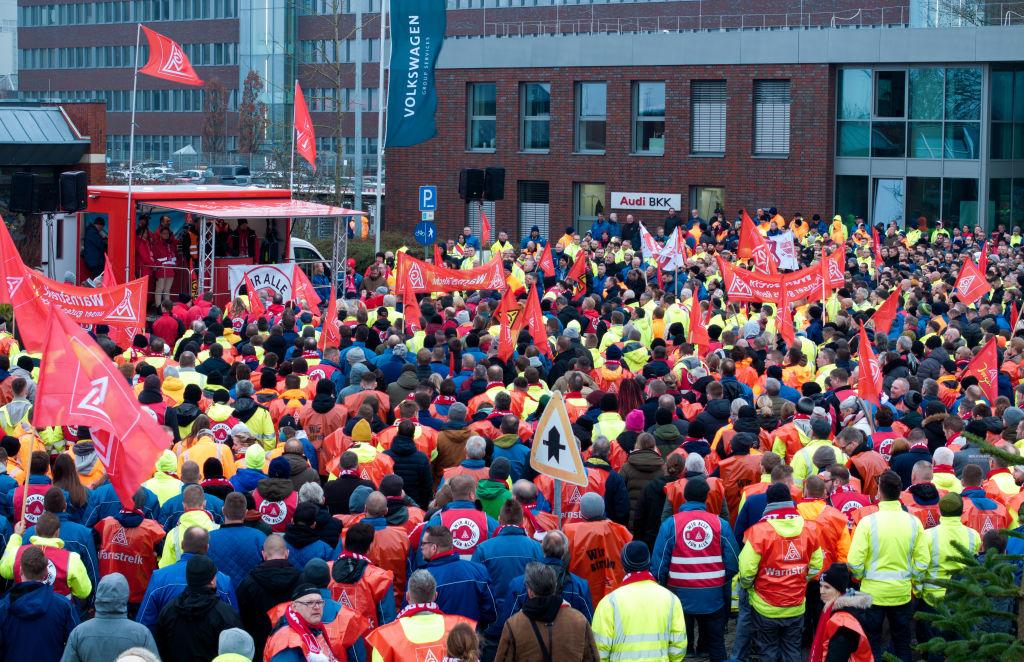
The negotiations began on 24 November 2026 in Emden, Germany, where Volkswagen employees and trade union representatives are opposing management’s proposed restructuring programme.
The dispute is attracting international attention because Volkswagen is one of the world’s largest automobile manufacturers. Its financial performance, production decisions and employment policies have significant consequences for the European automotive industry and international vehicle markets.
According to Reuters, Volkswagen is considering approximately 100,000 job reductions globally as part of its wider restructuring efforts. Four German factories have also been identified as potential candidates for closure early in the next decade.
The company argues that its current cost structure is too high and that major changes are necessary to remain competitive in the international automobile industry.
Workers protest against company restructuring
The negotiations have taken place against a background of growing employee dissatisfaction.
Approximately 4,000 workers gathered in Emden to demonstrate against the proposed cuts. Some protesters carried black coffins marked with messages representing the loss of trust and confidence in the company’s future.
The demonstrations reflect concerns that restructuring could damage local communities, reduce household incomes and weaken employment opportunities.
Volkswagen employs approximately 120,000 people in Germany. Its factories support thousands of additional jobs through suppliers, transport companies, maintenance contractors and other service providers.
A major reduction in Volkswagen’s workforce could therefore affect businesses beyond the company’s direct employees.
Trade union IG Metall is particularly concerned that management’s proposals could undermine an agreement reached in late 2024.
That earlier agreement included plans for 35,000 job reductions in exchange for employment and investment guarantees.
The union argues that the new restructuring proposals threaten the commitments made during those negotiations.
Why Volkswagen wants to reduce costs
Volkswagen is facing several serious challenges in international markets.
One major challenge is increasing competition from Chinese automobile manufacturers.
Chinese companies have become increasingly competitive in electric vehicles, battery technology and affordable vehicle production. Their ability to offer competitively priced models has placed pressure on traditional European manufacturers.
Another challenge involves the cost of manufacturing vehicles in Germany.
German factories face relatively high labour, energy and operating costs compared with production facilities in some competing countries.
The company also faces substantial international tariff expenses, which affect the profitability of manufacturing and selling vehicles across borders.
Furthermore, the transition from traditional petrol and diesel vehicles towards electric mobility requires substantial investment in new technologies.
Volkswagen must finance battery development, software systems, production equipment and electric vehicle platforms while maintaining its existing operations.
These expenses have created pressure on the company’s profitability.
Wage negotiations and proposed changes
Volkswagen management has presented several proposals to reduce labour expenses.
The company wants to freeze employee wages during 2027 and 2028. It is also seeking reductions in certain employment benefits and special payments.
Another important proposal concerns working hours.
“German automobile manufacturer Volkswagen has begun important wage negotiations with labour representatives amid growing tensions over its plans…”
Volkswagen wants greater flexibility in the traditional 35-hour working week. Under the proposal, employees could be required to work additional hours without receiving corresponding extra pay in certain circumstances.
Management also wants to change some special agreements covering managerial employees and anniversary payments.
These proposals have created significant disagreement between management and labour representatives.
Employees argue that they should not carry the full financial burden of the company’s difficulties, particularly after years of contributing to Volkswagen’s production and profitability.
Management, on the other hand, argues that cost reductions are necessary to protect the company’s long-term future.
Possible consequences of industrial action
The trade union has warned that strikes could begin from 1 January 2027 if negotiations fail.
Industrial action could interrupt vehicle production, delay deliveries and create additional costs for Volkswagen.
The consequences could extend beyond Germany because Volkswagen operates international manufacturing facilities and depends on complex global supply networks.
Suppliers of vehicle components, batteries, electronics and industrial equipment could also experience reduced orders if production is interrupted.
Investors may become concerned about the company’s ability to implement its restructuring programme without damaging employee relations.
Volkswagen’s management is therefore under pressure to reach an agreement that improves competitiveness while preventing a prolonged labour dispute.
Impact on the European automotive industry
The dispute reflects wider difficulties facing European vehicle manufacturers.
Automakers are attempting to balance traditional manufacturing operations with the investment requirements of electric mobility.
They must compete against companies from China, the United States, Japan and South Korea while dealing with changing consumer demand and international trade policies.
If Volkswagen succeeds in reducing costs, it could improve its competitiveness and create additional financial resources for investment in electric vehicles and new technology.
However, excessive cost reductions could damage employee morale, production quality and the company’s relationship with its workforce.
There is also a wider social dimension. Manufacturing jobs remain important to Germany’s economy, particularly in industrial regions where large factories support local businesses.
Future outlook
The outcome of the negotiations will be important for Volkswagen’s financial and industrial future.
A successful agreement could help the company restructure its operations while protecting important employment commitments.
A failure to reach agreement could lead to strikes, production interruptions and further uncertainty for investors and employees.
Conclusion: Volkswagen’s labour dispute demonstrates the difficulties facing traditional international automobile manufacturers as they adapt to competition, technological change and rising operating costs. The company must find a way to protect profitability without creating a serious employment crisis. The negotiations will therefore be closely watched by international investors, workers, suppliers and governments.