
Argentina’s first international match since Lionel Messi retired ended in defeat, with Uruguay winning 2-1 at La Bombonera on Friday, November 13. The result gave the visitors a victory in Buenos Aires and placed fresh attention on the challenge facing coach Lionel Scaloni as he begins preparing the national team for a future without its most influential player.

The friendly was more than another fixture in the international calendar. Messi’s retirement in early October had left Argentina facing questions about leadership, creativity and the identity of a team that relied on his influence for almost two decades. His absence was visible before kick-off: the stadium did not sell out, and Scaloni chose not to give the famous number 10 shirt to another player.
Argentina began with much of the possession and attempted to control the match through patient passing. Yet possession did not consistently become danger. Uruguay defended with discipline, disrupted the hosts’ rhythm and looked for opportunities to attack quickly when Argentina lost the ball.
Uruguay turn the match after halftime
The breakthrough arrived three minutes into the second half. Argentina defender Leonardo Balerdi put the ball into his own net in the 48th minute, giving Uruguay the lead. The goal changed the atmosphere inside La Bombonera and forced the home side to take greater risks in search of an equaliser.
Uruguay capitalised again five minutes later. Maximiliano Araújo scored in the 53rd minute, extending the advantage to 2-0 and putting Argentina under immediate pressure. The visitors had turned a closely contested first half into a position of control through two goals in a short period.
Argentina responded by increasing its attacking urgency. Julián Álvarez pulled one goal back in the 73rd minute, giving the hosts hope of rescuing a result.
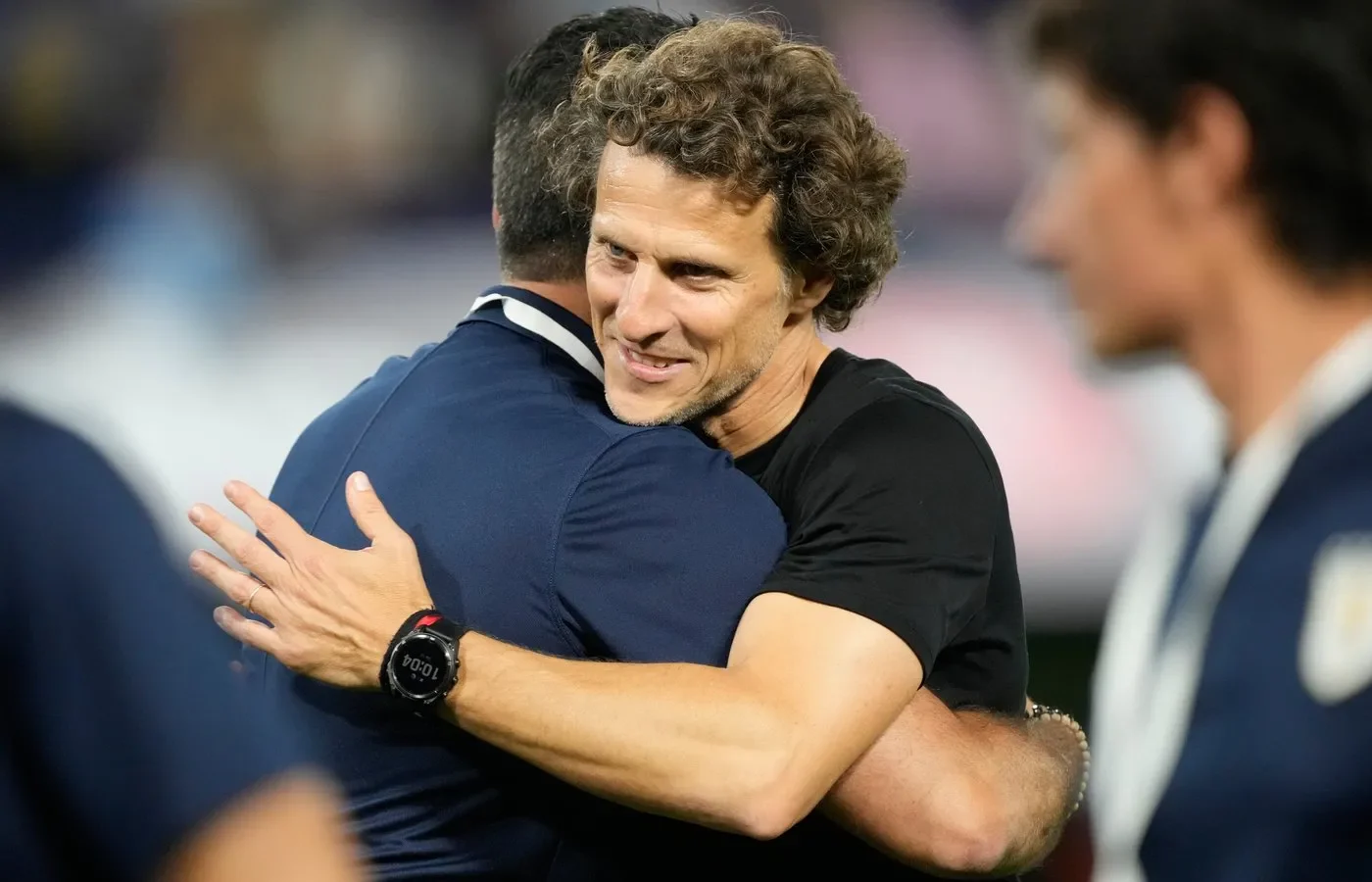
For Uruguay, the result offered encouragement under coach Diego Forlán. A win away to the world champions is a valuable outcome, even in a friendly, because it tests a team’s organisation and composure in a difficult environment. Uruguay’s ability to absorb pressure after taking the lead was particularly important as Argentina pushed forward late in the match.
Argentina face the post-Messi question
Argentina’s challenge is not simply to find another player who wears the number 10 shirt. Messi’s contribution has included goals, assists, playmaking, leadership and the ability to change the tempo of a match. Those qualities cannot be transferred to one individual by assigning a shirt number.
Scaloni has left the number unassigned for now, explaining that he has not selected a successor. The decision reflects the scale of the responsibility and avoids placing an unnecessary burden on a player before the team has established a new attacking structure.
Nicolás Paz and Thiago Almada were among the players considered in discussion about Argentina’s creative future, but the match showed that the team must develop more than an individual replacement. Argentina need several players to share responsibility for creating chances, progressing the ball and deciding matches in the final third.
The more important test is how quickly the coaching staff can adapt the system and help younger players take on greater responsibility. Messi’s absence may encourage a more collective approach, but that change will require time, repetition and clear roles.
“Argentina’s first international match since Lionel Messi retired ended in defeat, with Uruguay winning 2-1 at La Bombonera…”
Scaloni’s next decisions
Scaloni’s contract extension through 2030 provides continuity during this transition. He has guided Argentina through major success, and his familiarity with the squad gives him an advantage as he plans for the next generation. However, continuity also brings expectations. Supporters will want to see a team that remains competitive while developing a clear identity beyond its former captain.
The next friendly against Costa Rica in Córdoba offers an immediate opportunity to respond. Argentina will need to improve its defensive concentration after conceding twice in quick succession against Uruguay. It will also need to turn possession into more threatening attacking movements, particularly when opponents defend compactly.
The coaching staff can use the fixture to assess combinations and give players opportunities to demonstrate leadership. Rather than searching for a direct copy of Messi, Argentina may benefit from distributing creative duties across the midfield and forward line.
Uruguay, meanwhile, will return home to face the Dominican Republic. The victory in Buenos Aires gives Forlán a positive result to build on, but the next challenge will be maintaining the same discipline and intensity against a different opponent.
A new chapter for the world champions
The end of Messi’s international career marks a major emotional change for Argentine football. His achievements have shaped a generation of supporters and helped define the country’s modern football identity. The vacant number 10 shirt at La Bombonera became a visible reminder that the national team is entering unfamiliar territory.
Yet Argentina’s future should not be judged by one friendly defeat. The squad still contains experienced international players and emerging talent capable of shaping a successful next chapter. The responsibility now rests with Scaloni to create a system that uses those strengths collectively.
Uruguay leave Buenos Aires with the victory, while Argentina leave with questions that will require careful answers. The scoreline matters, but the larger story is the beginning of a transition that will test the world champions’ depth, adaptability and ability to build a team identity beyond one extraordinary footballer.
The result will give Scaloni useful evidence about which combinations can handle pressure, especially when Argentina cannot rely on one player to create decisive moments in crowded attacking areas.