
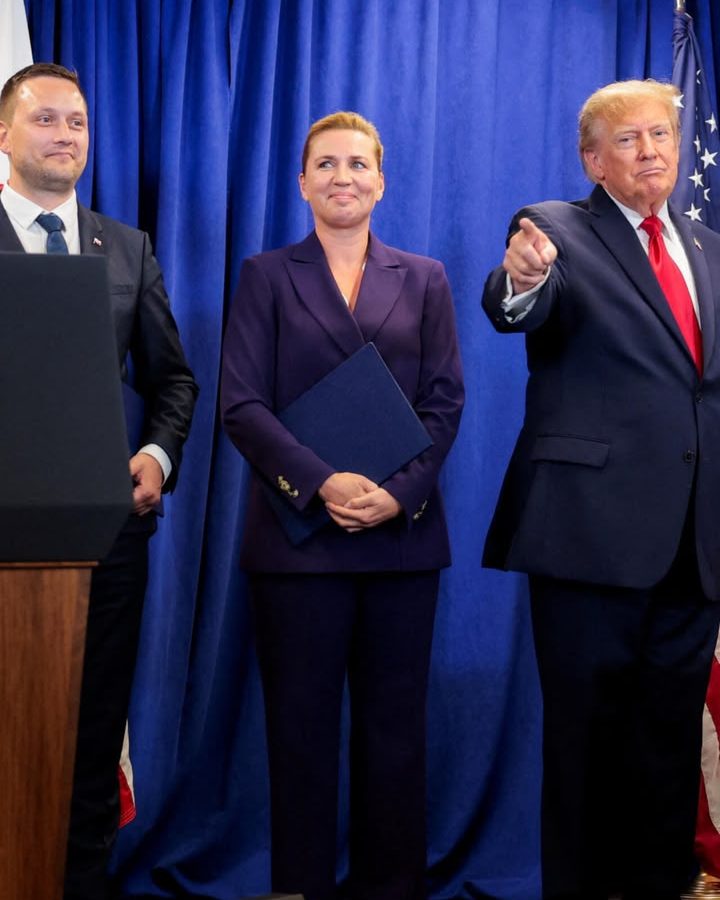
On September 22, 2026, a landmark geopolitical shift occurred on the sidelines of the United Nations General Assembly in New York. The United States, Denmark, and Greenland signed a historic trilateral security agreement that fundamentally alters the balance of power in the Arctic Circle. Signed by U.S. President Donald Trump, Danish Prime Minister Mette Frederiksen, and Greenland Prime Minister Jens-Frederik Nielsen, the accord grants the U.S. military unprecedented operational access to Greenland while attempting to navigate the delicate internal politics of Danish sovereignty and Greenlandic self-determination.
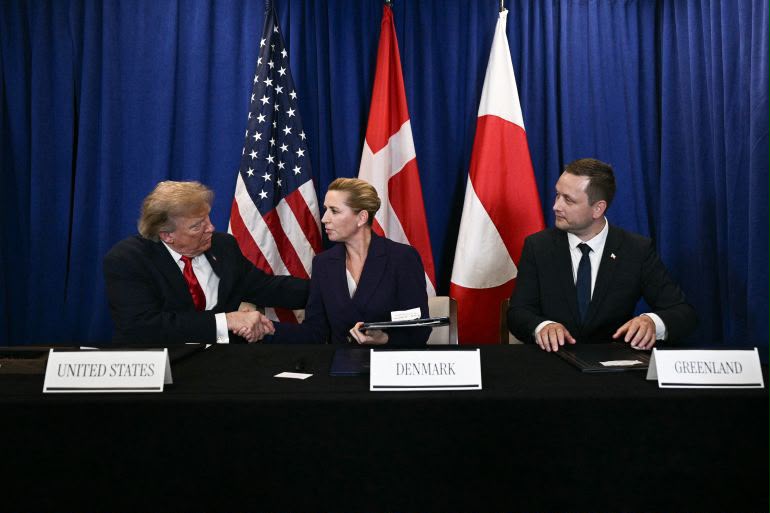
At the core of the agreement is a massive expansion of the American military footprint in the region. The U.S. has secured the rights to construct two new military bases on the strategically vital island and deploy a state-of-the-art “Golden Dome” missile defense system. This expansion builds upon the long-standing American presence at Pituffik Space Base, formerly known as Thule Air Base, which has served as a critical early-warning radar node since the Cold War. The new deal effectively transforms Greenland into a central pillar of Western aerospace and maritime defense.
However, the pact has immediately ignited intense debate over sovereignty. President Trump heralded the agreement as a victory that yields permanent security control over the territory to the United States. In stark contrast, leaders in Copenhagen and Nuuk have rushed to clarify the parameters of the deal. Prime Minister Frederiksen and Prime Minister Nielsen issued firm reminders that Greenland’s sovereignty, legal framework, and ultimate right to self-determination remain strictly intact. The deal is framed by the European partners not as a capitulation, but as a reciprocal defense alliance designed to protect shared democratic values.
The driving force behind this rapid militarization is the intensifying global race for the Arctic. As global warming melts polar ice caps, new shipping lanes are opening, and vast untapped reserves of oil, gas, and rare earth minerals are becoming accessible. The Pentagon views Greenland as vital real estate to block the expanding footprint of non-NATO adversaries. Both Russia, which has steadily remilitarized its northern coastline, and China, which has declared itself a “near-Arctic state” and sought heavy infrastructure investments in Greenland, are the explicit targets of this Western consolidation.
“The United States, Denmark, and Greenland signed a historic trilateral security agreement that fundamentally alters the balance of…”
For Denmark, the agreement is a tightrope walk. Copenhagen must satisfy its primary security ally, the United States, while managing its complex relationship with Greenland, an autonomous territory transitioning toward greater independence. By including Nuuk as an equal signatory to the trilateral pact, the deal recognizes Greenland’s growing political maturity, even as it embeds the island deeper into American military strategy. Ultimately, the 2026 trilateral agreement signals that the Arctic is no longer a frozen frontier of isolation, but the front line of 21st-century global strategy.