
A building belonging to Saudi Arabia’s state-owned oil giant, Saudi Aramco, has been damaged following an attempted attack in the Saudi capital, Riyadh, raising fresh concerns about the security of critical energy infrastructure in the Middle East.
Saudi Arabia’s Ministry of Energy confirmed on Sunday, November 8, that an administrative building affiliated with Aramco had sustained limited damage after falling debris and shrapnel struck the property.
Authorities reported that no injuries or fatalities had been recorded.
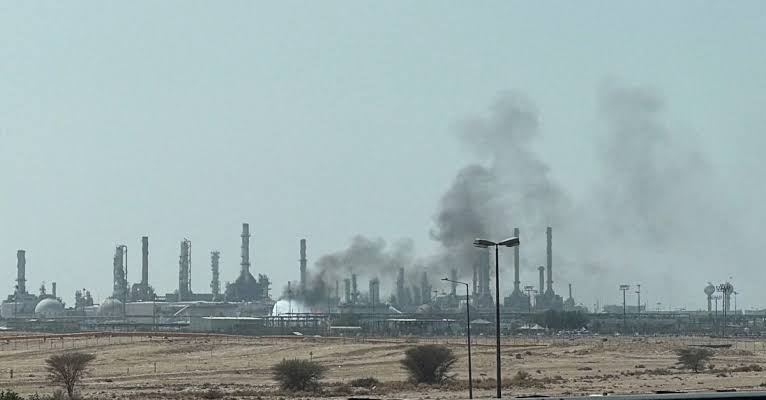
The incident comes amid escalating hostilities involving Saudi Arabia and Yemen’s Houthi movement, with missile and drone attacks increasingly threatening important infrastructure, airports and energy facilities across the region.
ARAMCO BUILDING DAMAGED IN RIYADH
According to Saudi officials, the incident occurred after an attempted attack targeting an administrative building belonging to the energy company.
A Reuters witness reported seeing windows blown out across several floors of the Aramco Tower in Riyadh’s King Abdullah Financial District.
The Saudi Ministry of Energy described the damage as limited and confirmed that emergency authorities had responded to the incident.
Although the building suffered damage, officials said there were no casualties.
The attack has renewed attention on the vulnerability of major commercial and energy-related facilities in Saudi Arabia, particularly as the regional conflict continues to intensify.
MISSILES INTERCEPTED AS SAUDI ARABIA FACES NEW SECURITY THREATS
The incident happened after Saudi air defences intercepted several missiles directed towards Riyadh and other parts of the Kingdom.
According to the Saudi-led coalition, two ballistic missiles targeting Riyadh were intercepted, while additional missiles and cruise missiles were destroyed in other regions.
Saudi Civil Defense also issued security alerts in several areas, including Riyadh, Dammam, Al-Ahsa and Najran, warning residents about potential danger.
The warnings were subsequently lifted after authorities determined that the immediate threat had passed.
The latest developments demonstrate the growing security challenges facing Saudi Arabia as the conflict involving Yemen’s Houthis continues to expand.
HOUTHIS AND THE ESCALATING REGIONAL CONFLICT
The latest incident comes against the background of renewed fighting between Saudi Arabia and Yemen’s Iran-aligned Houthi movement.
The Houthis have increasingly targeted Saudi territory using missiles and drones, with airports, oil installations and other strategic infrastructure among the locations affected by the wider conflict.
Reuters reported that the latest missile activity was linked to the Houthi campaign against Saudi Arabia. However, the Saudi Ministry of Energy’s initial announcement focused on the damage to the Aramco building and did not independently establish responsibility for the specific damage.
The escalation also follows Saudi military operations against Houthi-controlled areas in Yemen, further increasing tensions between the two sides.
The situation is particularly concerning because Saudi Arabia remains one of the world’s most important oil-producing countries.
WHY ARAMCO IS A MAJOR TARGET OF CONCERN
Saudi Aramco is not an ordinary business. It is one of the world’s largest energy companies and plays a critical role in supplying oil and petroleum products to international markets.
Its facilities support oil production, refining, transportation and distribution.
Any serious disruption to its operations could have consequences beyond Saudi Arabia, potentially affecting international energy supplies, oil prices, transportation costs and industrial production.
The latest incident is particularly sensitive because Aramco has already faced attacks on its facilities during the ongoing escalation.
In October 2026, an administrative building at the company’s headquarters in Dhahran was also attacked, resulting in a limited fire, according to Saudi authorities. Reuters separately reported extensive damage to parts of the complex, citing people familiar with the incident.
These developments have raised questions about the protection of important energy infrastructure during periods of regional instability.
“A building belonging to Saudi Arabia’s state-owned oil giant, Saudi Aramco, has been damaged following an attempted attack…”
POSSIBLE EFFECTS ON GLOBAL OIL MARKETS
The latest attack could increase concerns among international energy traders and investors.
Saudi Arabia is a major supplier of crude oil to countries across Asia, Europe and other international markets.
Whenever important Saudi energy infrastructure comes under threat, global markets pay close attention to the possibility of supply disruptions.
Even when production continues normally, security concerns can influence market expectations and contribute to uncertainty in oil prices.
For countries that depend heavily on imported petroleum products, prolonged instability in the Middle East could create additional economic pressure.
African countries, including Uganda, also have an interest in developments affecting international petroleum supplies because changes in global oil prices can influence fuel costs, transport expenses and the prices of goods and services.
However, the damage reported in Riyadh does not itself establish that Aramco’s oil production or exports have been disrupted.
SAUDI AUTHORITIES RESPOND
Saudi authorities have reportedly taken immediate measures following the incident.
Emergency agencies responded to the damaged building, while security warnings were issued across several areas as air-defence operations continued.
The government has maintained that the incident caused limited damage and resulted in no reported injuries or deaths.
The priority remains protecting civilians, securing critical infrastructure and preventing further attacks.
International observers will also be watching closely to determine whether the latest escalation could affect regional stability and international energy security.
WHAT HAPPENS NEXT?
The situation remains concerning as the conflict continues to develop.
Questions remain about the security of Saudi Arabia’s energy infrastructure, the possibility of further missile and drone attacks, and the wider consequences for international oil markets.
Aramco’s importance to the global economy means that developments affecting the company are likely to attract international attention.
For now, the reported damage to its Riyadh administrative building has not been accompanied by confirmation of a disruption to oil production.
Further official statements and independent reporting will be important in establishing the full extent of the incident.
BERLIMEDIA VERDICT
The targeting of a Saudi Aramco building represents another worrying development in the growing regional conflict.
Although Saudi authorities have confirmed limited damage and no casualties, the incident highlights the risks facing critical infrastructure when military tensions escalate.
The consequences of a prolonged conflict could extend far beyond the Middle East, affecting energy markets, international trade and economies that depend on affordable fuel.
The biggest concern is no longer simply the damage to one building, but the growing threat to the infrastructure that supports global energy supplies.
Saudi Arabia now faces the challenge of protecting its strategic assets while managing an increasingly dangerous regional security situation.