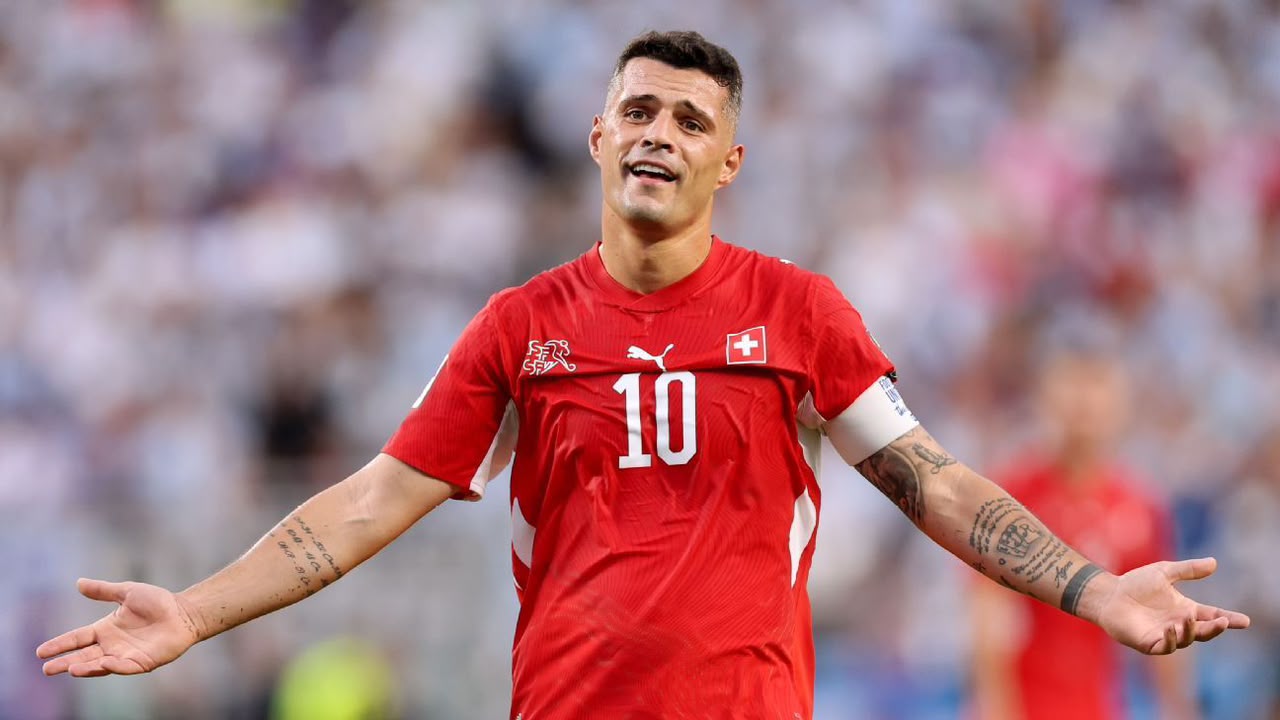
Sunderland captain Granit Xhaka has accepted a suspended financial penalty in Switzerland after admitting that he obtained a false COVID-19 vaccination certificate, bringing a significant development in the legal case involving the experienced midfielder.
Xhaka addressed the decision publicly on Thursday, October 8, 2026, confirming that he accepted the judgment and took responsibility for his actions. The case has attracted attention in both football and Switzerland, where the midfielder remains a prominent figure in the national game.
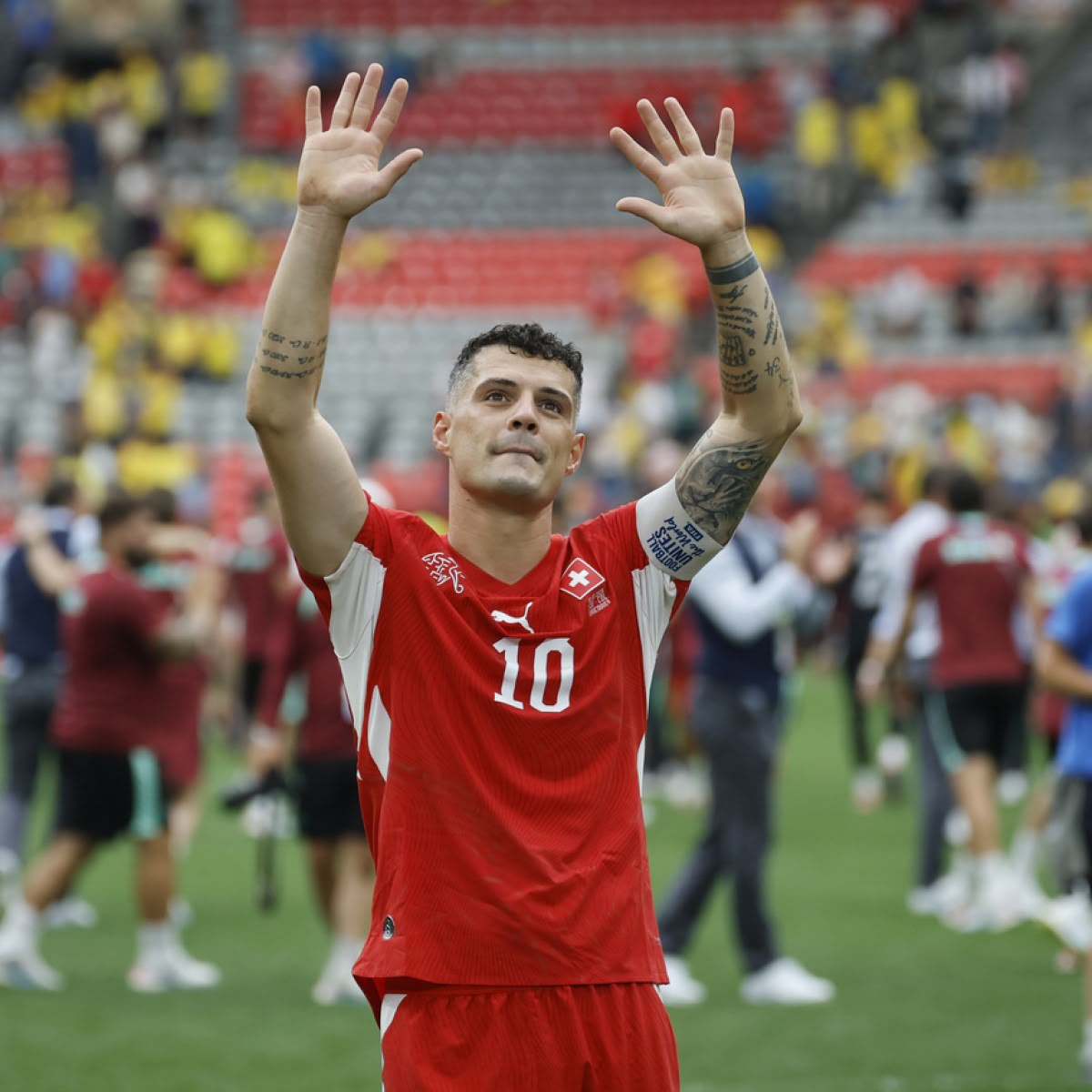
According to Reuters, the penalty amounts to 150,000 Swiss francs, comprising 50 daily fines of 3,000 francs each. The financial penalty is suspended for a two-year probationary period, meaning it will not be enforced provided he commits no further offence during that period.
Xhaka also confirmed that he had paid the court costs.
The development follows his earlier admission that he obtained the certificate during the COVID-19 pandemic, when he said he had serious reservations about vaccines and was experiencing considerable uncertainty.
The case has placed renewed attention on the responsibilities of professional athletes, whose decisions away from the pitch can carry consequences for their careers and public reputations.
Xhaka takes responsibility
In his public response, Xhaka stood by his earlier commitment to accept responsibility for the decision.
The midfielder explained that his actions took place during a period when he had deep mistrust of COVID-19 vaccines. He also indicated that he had cooperated with the authorities investigating the matter.
His acceptance of the judgment marks an important development in a case that had already affected his international football commitments.
The circumstances surrounding the certificate emerged during a wider investigation involving a doctor in Lucerne who was accused of issuing vaccination certificates without administering the corresponding vaccines. The doctor has denied the allegations against her.
Xhaka’s admission and the resulting judgment concern his own conduct. The wider investigation should not be confused with the specific decision concerning the footballer.
The suspended nature of the penalty is also important. Although the court imposed a financial sentence, it is conditional rather than an immediate requirement to pay the full fine. Xhaka has stated that he accepts the decision and has already covered the procedural costs.
Switzerland international absence
The controversy has also affected Xhaka’s involvement with the Swiss national team.
The Swiss Football Association confirmed in September that the midfielder would not participate in the team’s upcoming international gathering following discussions between Xhaka and the association’s leadership.
Association president Peter Knäbel said Xhaka had informed officials about the situation and intended to address it publicly and take responsibility.
The decision was presented as a joint step intended to allow the national team to concentrate on its sporting commitments while the matter was addressed.
Xhaka subsequently missed four Nations League fixtures involving North Macedonia, Scotland and Slovenia during the recent international period.
His absence was significant because of his experience and leadership role within the Swiss squad. The midfielder has spent years representing his country at major international tournaments and has frequently served as captain.
The association had indicated that the situation would be reassessed after the international window. His future involvement with the national team will depend on the subsequent discussions and decisions.
Sunderland and the Premier League
“Granit Xhaka has accepted a suspended financial penalty in Switzerland over a false COVID-19 vaccination certificate. The Sunderland…”
At club level, Xhaka remains an important figure for Sunderland, where his experience and leadership have been central to the team’s development.
The midfielder joined Sunderland after helping Bayer Leverkusen win the Bundesliga title under manager Xabi Alonso. Before that, he spent seven years at Arsenal, making 297 appearances for the north London club.
His career has included spells in the Premier League and German football, giving him considerable experience in demanding domestic and international competitions.
At Sunderland, Xhaka has been valued for his ability to organise the midfield, distribute the ball and guide younger teammates. His influence extends beyond passing and tackling, with his communication and tactical awareness helping shape the team’s approach.
The legal case has therefore created a difficult period for a player who continues to hold a prominent position at club level.
However, the suspended penalty does not automatically establish that Sunderland will take disciplinary action against him. Any response from the club would need to be assessed separately from the Swiss legal decision.
The immediate questions for supporters concern how the situation will affect his international return and whether it will have any further consequences for his professional career.
A wider question for professional football
Xhaka’s case highlights how conduct outside football can become an issue for players, clubs and national associations.
Professional athletes are often viewed as public representatives of their teams and countries. Their decisions can attract attention well beyond the sporting environment, particularly when legal matters or public health issues are involved.
Clubs and governing bodies must consider their responsibilities to supporters, teammates and the wider public while ensuring that individual cases are handled according to the relevant rules and procedures.
For national associations, situations involving senior players can also create difficult questions about timing, team unity and public confidence.
Xhaka’s absence during the recent international window demonstrates how a matter outside a match can affect squad selection and preparation.
At the same time, the details of the judgment matter. A suspended financial penalty is different from an immediate fine or a prison sentence, and the conditions attached to the decision should be reported accurately.
What happens next?
The immediate legal development is that Xhaka has accepted the judgment and confirmed that he has paid the court costs. The suspended financial penalty remains conditional on his conduct during the two-year probationary period.
Attention will now turn to his continued involvement with Sunderland and the next steps regarding his place in the Swiss national team.
His case is a reminder that a footballer’s career is shaped not only by performances on the pitch but also by decisions that can have legal and professional consequences.
For Xhaka, the priority will be to navigate the aftermath of the judgment while continuing his work at club level and addressing the situation with the Swiss football authorities.