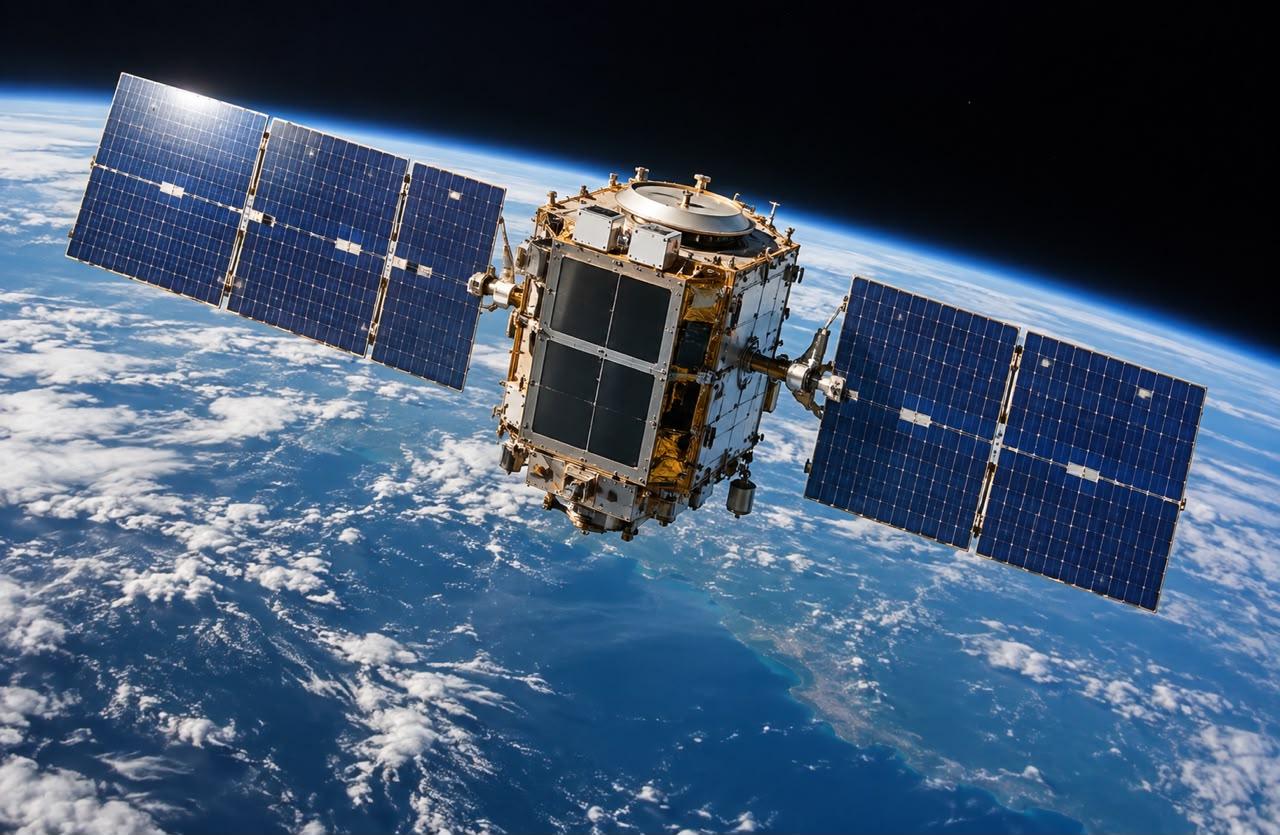
Google has launched a prototype satellite carrying artificial intelligence processors into orbit as the technology company investigates whether future AI data centres could operate in space.
The mission is part of Google’s Project Suncatcher, an experimental programme exploring the possibility of using satellites equipped with specialized computing hardware to process artificial intelligence workloads beyond Earth.
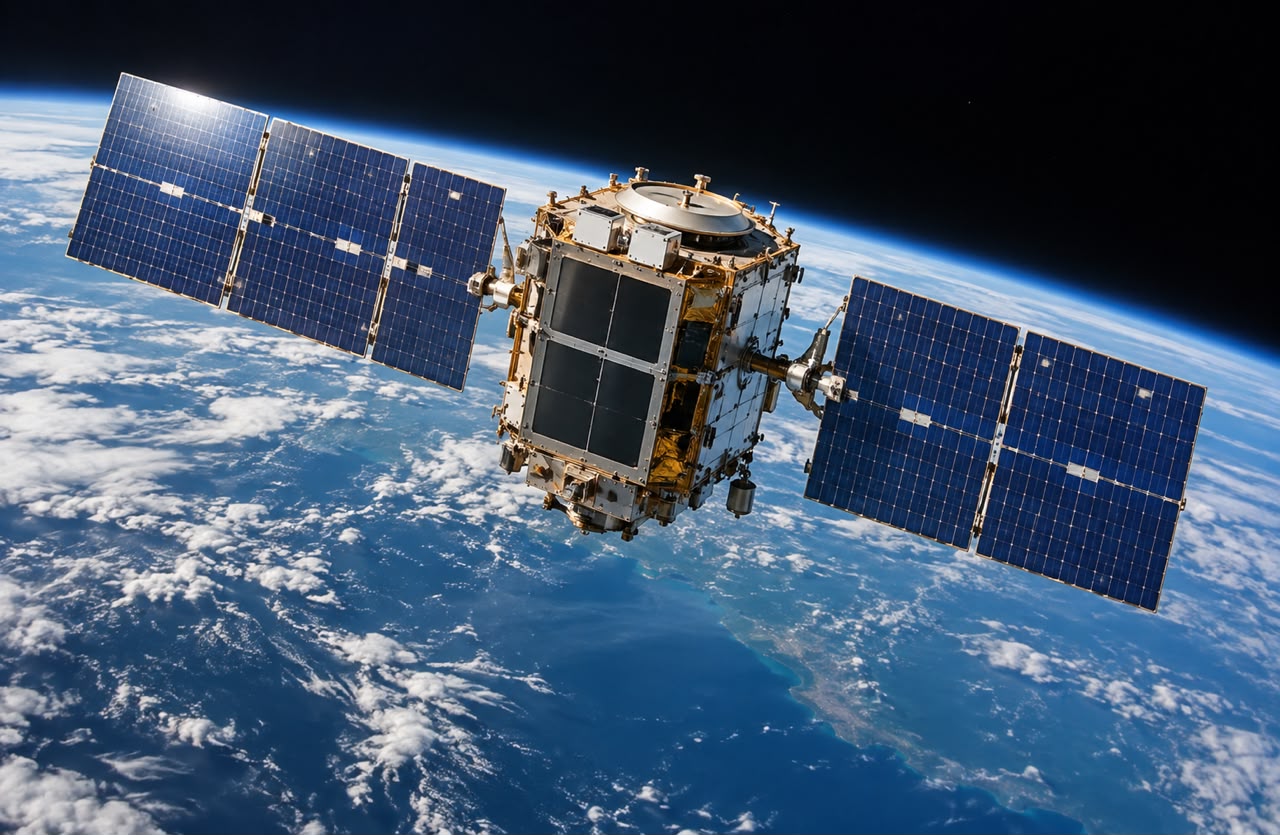
The prototype was launched aboard a SpaceX rocket on October 1. Google developed the project with Planet, with the satellite carrying Google’s Tensor Processing Units, commonly known as TPUs.
The mission represents an unusual approach to one of the biggest challenges facing the technology industry: how to provide enough computing power and electricity to support rapidly growing demand for artificial intelligence.
Why put AI infrastructure in space?
AI systems require enormous amounts of computing power.
The data centres supporting modern AI services consume large quantities of electricity and require sophisticated cooling systems to prevent computer processors from overheating.
Google is investigating whether space could offer an alternative environment for some of that infrastructure.
Satellites can receive sunlight continuously for much of their time in orbit, creating the possibility of using solar power to supply computing equipment.
The company believes future satellite networks could potentially operate large numbers of AI processors and connect them through high-speed communication systems.
Major engineering challenges
Moving data centres into space would not be simple.
Electronic equipment operating beyond Earth is exposed to radiation that can damage or disrupt computer components. Engineers therefore need to understand how AI processors perform under conditions that are very different from those inside terrestrial data centres.
Cooling is another major challenge.
Computer chips generate heat while processing information. On Earth, data centres use large cooling systems to remove that heat. Spacecraft require different approaches to thermal management because conventional cooling methods cannot simply be transferred into orbit.
Launch costs also remain a major consideration.
“A key objective of Project Suncatcher is to test whether large-scale machine-learning infrastructure can operate in space using…”
Large numbers of satellites would need to be launched, maintained and eventually replaced. Any future commercial system would therefore have to demonstrate that its computing capacity could justify those costs.
Testing the concept
Google’s current mission is an experiment rather than a commercial data-Centre deployment.
The satellite will allow researchers to study how AI processors operate in space and how systems could communicate with one another while in orbit.
Google has described Project Suncatcher as a long-term research effort rather than a technology that is ready to replace conventional data centres.
The company is also examining how future satellite networks could be designed to handle large AI workloads.
The future of AI infrastructure
The experiment comes as technology companies around the world invest heavily in new data centres to meet growing AI demand.
Companies are searching for additional sources of electricity, more efficient cooling systems and new ways to expand computing capacity.
Space-based computing could eventually become one part of that wider technological landscape if engineering and economic challenges can be overcome.
For now, Google’s satellite experiment is primarily about collecting data.
The results could help researchers understand whether AI processors can reliably operate in orbit and whether solar-powered computing platforms could eventually support large-scale artificial intelligence workloads.
If successful, the project could open a new chapter in the development of computing infrastructure — one that places some of the world’s future AI capacity above the Earth rather than on it.