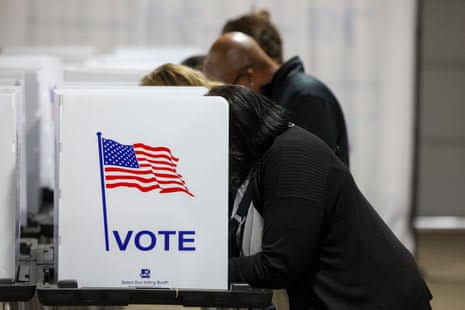

The 2026 United States midterm elections have produced a major political shift, with the Democratic Party securing control of both chambers of Congress following voting on November 3. The results represent a significant development for President Donald Trump’s administration, as Republicans lose their congressional majorities after two years of governing with control of both chambers.

Millions of Americans participated in the elections to determine the political composition of the US Congress, state governorships and other important public offices. The outcome has attracted international attention because of its potential consequences for American domestic policy, government accountability, economic priorities and the country’s political direction.
According to preliminary results reported by Reuters, the Democrats secured victories in several traditionally Republican states, including Texas, South Carolina, Iowa and Kansas. The results demonstrate significant changes in voting patterns across different regions of the country.
The election also represents an important test of public opinion regarding the direction of the Trump administration as it enters the second half of its presidential term.
Understanding the 2026 Midterm Elections
Midterm elections take place halfway through a four-year presidential term in the United States. Unlike presidential elections, which determine who occupies the White House, midterm elections primarily determine the composition of Congress and several state and local government positions.
The US Congress consists of two chambers: the House of Representatives and the Senate.
The House has 435 voting members, all of whom face elections every two years. The Senate has 100 members, with approximately one-third of its seats contested during each regular election cycle.
In the 2026 elections, Americans voted in all 435 House districts, alongside 35 Senate contests, including special elections. Gubernatorial elections were also held in 36 states.
These elections are important because the party controlling Congress has considerable influence over legislation, government spending, investigations and oversight of the executive branch.
Democrats Secure Control of Both Chambers
One of the biggest developments of the 2026 elections was the Democratic Party’s success in regaining control of both the House of Representatives and the Senate.
According to the Guardian’s November 5 results tracker, Democrats had secured 54 Senate seats, including two independents aligned with them, compared with 44 Republican seats, with two contests still uncalled.
In the House of Representatives, Democrats had secured 251 seats against 155 Republican seats, while several races remained uncalled.
The results indicate a significant change in the balance of political power in Washington.
Democratic victories in states that traditionally support Republican candidates attracted particular attention. Texas, South Carolina, Kansas and Iowa were among the states where Democratic candidates secured important victories.
In Texas, Democratic candidate James Talarico defeated Republican Ken Paxton in the Senate race. The result was particularly significant because Texas has traditionally been a strong Republican state in presidential and statewide elections.
Democratic gains in other Republican-leaning states further demonstrated the geographical reach of the election results.
Economic Concerns and the Cost of Living
Economic issues played an important role in the 2026 election campaign.
For many American households, the cost of living, inflation, fuel prices, housing expenses and access to affordable healthcare remained major concerns.
According to Reuters election reporting, voters expressed dissatisfaction with economic conditions and the administration’s handling of important national issues.
Rising household expenses have become an important subject in American political debates. Families continue to assess how government decisions affect their ability to afford basic necessities and maintain financial stability.
The economy is particularly important during midterm elections because voters often use their ballots to communicate their satisfaction or dissatisfaction with the party controlling the White House.
The election results suggest that economic concerns formed part of the broader political debate surrounding the Republican administration.
However, economic dissatisfaction was not the only factor influencing voter behaviour.
Foreign Policy and the Iran Conflict
Foreign policy also featured prominently in discussions surrounding the 2026 elections.
The United States’ involvement in the conflict with Iran, which began earlier in the year, became an important issue during the campaign.
Reuters reported that the conflict contributed to rising fuel prices and public concerns about the economic consequences of military involvement.
American voters were also concerned about national security, international relations and the financial implications of foreign military commitments.
The debate demonstrated how international developments can influence domestic politics, particularly when foreign policy decisions have direct consequences for ordinary citizens.
For the Trump administration, the election results present an opportunity to reassess how its foreign policy decisions are communicated and debated with Congress.
“The 2026 United States midterm elections have produced a major political shift, with the Democratic Party securing control…”
What the Results Mean for President Donald Trump
The Democratic victory creates a different political environment for President Donald Trump during the remaining two years of his presidential term.
With Democrats controlling both congressional chambers, the administration will face increased scrutiny when introducing legislation and implementing its policy agenda.
Congress plays a central role in approving federal budgets, passing legislation and conducting investigations into government activities.
Democratic control of the House will allow the party to lead congressional committees and exercise greater oversight of the administration.
Control of the Senate will also influence legislative negotiations, government appointments and other important constitutional responsibilities.
However, the president retains significant executive powers, including the ability to veto legislation passed by Congress.
This means that the coming two years could involve difficult negotiations between the White House and congressional Democrats.
Voter Participation and Democratic Accountability
The 2026 midterm elections also highlighted the importance of voter participation in American democracy.
Preliminary figures published by Al Jazeera, citing the University of Florida Election Lab, indicated that approximately 122.7 million ballots had been counted by November 5.
The estimated turnout represented approximately 48.8 percent of the eligible voting population, making it one of the highest midterm participation levels in more than a century.
The figures demonstrate the continued importance of midterm elections in determining the direction of American government.
Although presidential elections generally attract greater international attention, midterm elections can significantly change the relationship between the executive and legislative branches.
The results also demonstrate that voters have the ability to change the political balance of power even when the president is not directly contesting an election.
What Happens Next?
The election results will have consequences extending beyond the immediate political victories and defeats.
The new Congress is scheduled to take office on January 3, 2027.
Until then, Republicans retain control of both congressional chambers during the transition period.
Once the new Congress begins its work, Democrats will have the opportunity to influence legislative priorities, lead committees and investigate matters involving the federal government.
Republicans, meanwhile, will need to determine how to work with the incoming Democratic majorities while maintaining their influence in national politics.
The results may also influence preparations for the 2028 presidential election, as both political parties assess voter behaviour, campaign strategies and the issues that shaped the 2026 contest.
Conclusion
The 2026 United States midterm elections have marked an important moment in American political history.
The Democratic Party’s victories in the House and Senate represent a major change in congressional leadership and introduce a new political challenge for President Donald Trump.
Economic concerns, foreign policy, government accountability and public dissatisfaction were among the issues shaping the national political debate.
However, the full implications of the results will become clearer as the new Congress begins its work in January 2027.
For the United States, the elections demonstrate the importance of democratic participation and the role of voters in determining how political power is distributed.
As Washington prepares for a new congressional chapter, the central question will be whether the two political parties can navigate their differences and address the concerns of American citizens.
The 2026 midterm elections have changed the balance of power in Washington. The next two years will reveal how that change shapes the future of American politics.